
Views: 249 Author: Rchemsell Publish Time: 2026-09-30 Origin: Site


Content Menu
● Why the Application Comes First
● Ten Suppliers to Screen by Fit
>> Ajinomoto: Broad application knowledge
>> CJ BIO: Fermentation and feed nutrition
>> Evonik: Defined feed-grade products
>> ADM: Feed formats and delivery systems
>> Meihua Group: Large-volume nutrition shortlist
>> AMINO GmbH: Pharmaceutical-application focus
>> Merck: Research and peptide building blocks
>> Iris Biotech: Protected amino acids for synthesis
>> Rchemsell: Relevant for the next step, not every feedstock
>> Biorunstar: Treat the source article as a lead
● The Common Trap: Buying "99% Pure"
● Three Extra Checks That Improve Supplier Decisions
>> 1. Compare the delivered form, not the product name
>> 2. Track changes between the sample and shipment
>> 3. Separate supplier evidence from finished-product claims
● A Practical Qualification Workflow
>> 1. Is a 99% amino acid automatically suitable for cosmetics or pharmaceutical use?
>> 2. How can I detect the wrong L- or D-form?
>> 3. Is an Fmoc-protected amino acid the same as its unprotected amino acid?
>> 4. Can a peptide manufacturer supply bulk amino acids?
>> 5. What should a batch-specific certificate of analysis show?
The right amino acid supplier depends on what the material must do. A feed formulator buying liquid lysine, a cosmetics laboratory evaluating arginine, and a peptide chemist sourcing Fmoc-protected building blocks need different specifications, production capabilities, and documents. A list of famous companies alone cannot tell any of them which supplier is qualified.
This guide compares ten global suppliers and sourcing candidates by application, rather than declaring an unsupported winner. It also explains how to qualify bulk amino acid manufacturers, specialty reagent providers, and custom synthesis partners. Rchemsell is discussed where its stated peptide-development services are relevant—not presented as a verified large-scale producer of every commodity amino acid.
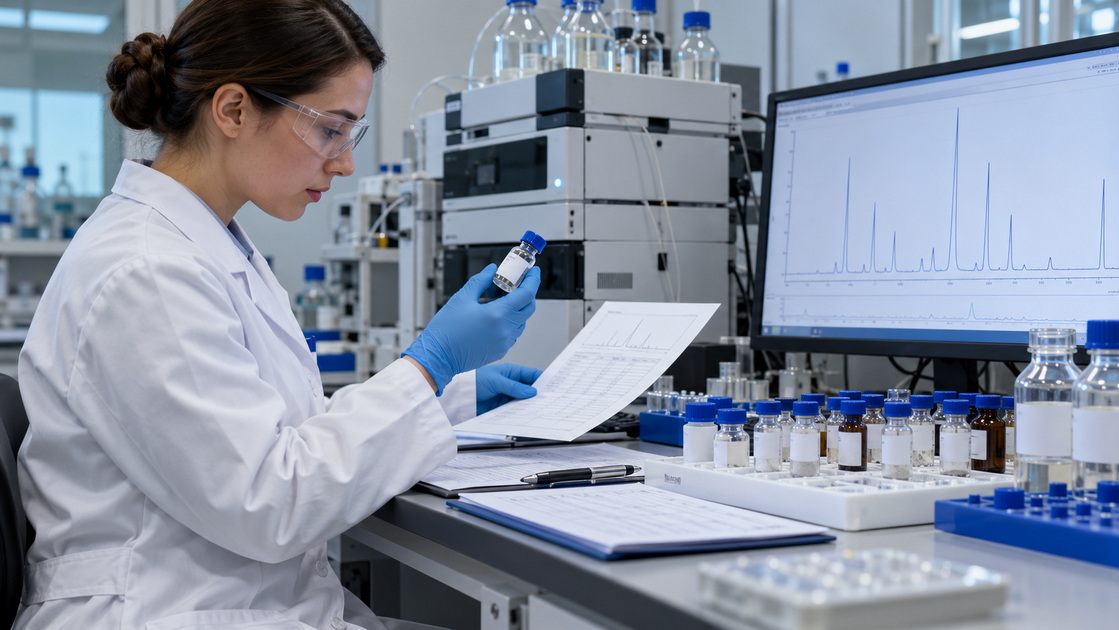
The global amino acids market spans food, animal nutrition, pharmaceuticals, laboratory research, and personal care. Grand View Research estimated its value at US$29.44 billion in 2024 and forecast US$58.01 billion by 2033. It estimated Asia-Pacific's 2024 revenue share at 46.8%. These are market-research estimates, not audited output figures for any manufacturer or evidence that every product called an amino acid is interchangeable.
A useful shortlist starts with the finished application:
| Buyer requirement | Likely supplier category | First technical question |
|---|---|---|
| Large-volume feed formulation | Feed-grade fermentation or nutrition specialist | Which chemical form and assay match the feed formula? |
| Food or cosmetic development | Ingredient producer with application-specific documentation | Is the exact grade suitable for the proposed market and use? |
| Cell-culture or analytical research | Laboratory-grade reagent supplier | Are identity, lot traceability, and relevant impurities documented? |
| Peptide synthesis | Protected amino acid and synthesis-reagent specialist | Are protection pattern, stereochemistry, and impurity limits correct? |
| Finished custom research peptide | Custom peptide manufacturer | Is the proposed product a peptide service rather than an amino acid ingredient? |
A 99% figure does not erase these differences. Evonik's feed-grade MetAMINO, for example, is described as 99% DL-methionine for animal nutrition. That specification does not make it a qualified ingredient for an unrelated cosmetic formula or pharmaceutical process. Grade follows the product specification and intended use—not the attractiveness of one number.
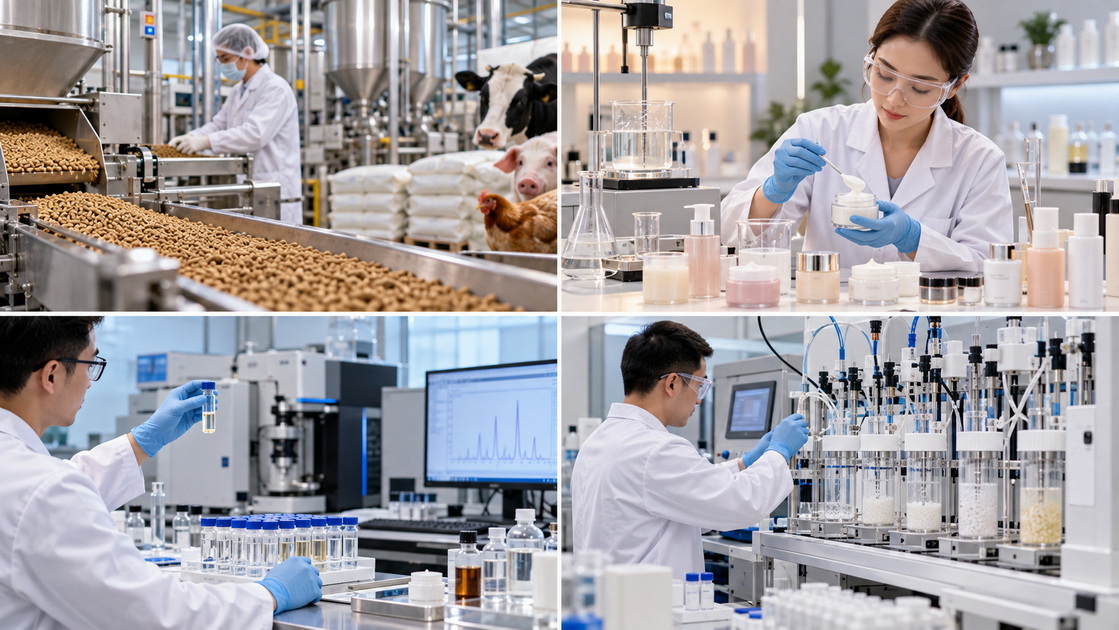
The companies below are not ranked by quality, price, or market share. Inclusion reflects a publicly identifiable product or service relevant to at least one sourcing route. Supplier pages establish what a company advertises; they do not independently verify a proposed lot, certification, lead time, or capacity.
| Supplier | Evidence-backed sourcing fit | Important boundary to check |
|---|---|---|
| Ajinomoto | Amino acid production, healthcare materials, cosmetic-related development | Confirm the precise product line and grade |
| CJ BIO | Fermentation-derived, feed-grade amino acids | Do not assume a feed portfolio meets laboratory specifications |
| Evonik | Animal-nutrition amino acids, including methionine and lysine sources | Check product form and assay |
| ADM | Feed amino acids, including liquid and encapsulated options | Check current availability of the requested physical form |
| Meihua Group | Livestock-nutrition products such as lysine and threonine | Obtain lot-specific quality and origin documents |
| AMINO GmbH | Pharmaceutical-application amino acids and tailored premixes | Confirm the exact site, grade, and project scope |
| Merck | Research amino acids and protected peptide-synthesis building blocks | Compare the correct protected derivative, not only the base amino acid |
| Iris Biotech | Fmoc-protected amino acids from small to bulk quantities | Verify protection pattern and stereochemical specification |
| Rchemsell | Custom research and cosmetic peptides; synthesis, testing, and packaging services | Verify whether it offers the requested free amino acid at all |
| Biorunstar | Amino acid offerings described on the original supplier page | Verify claims independently; its ranking is self-published |
Ajinomoto describes fermentation-based amino acid production and lists healthcare materials, pharmaceutical-related ingredients, and cosmetics-oriented technologies among its businesses. That breadth makes it a sensible first contact when a buyer needs to identify which business unit handles a particular amino acid and use case.
Do not convert corporate breadth into a claim that every Ajinomoto site supplies every grade. Request the exact product specification, manufacturing location, lead time, and documents for the material being quoted.
CJ BIO presents BestAmino as a feed-grade amino acid portfolio manufactured using fermentation and refining technology. Its site highlights products including L-tryptophan and L-valine. It is relevant to a feed buyer comparing supply systems and product formats.
The original article separately listed CJ CheilJedang and CJ Bio America. For procurement, the more useful question is which legal entity contracts, produces, and ships the required product. Do not count related entities as two independent manufacturing alternatives without checking the actual sites and ownership.
Evonik publishes identifiable amino acid products, including MetAMINO DL-methionine and Biolys L-lysine source, within its animal-nutrition business. That clarity helps feed formulators compare chemical form, stated concentration, and use instead of buying from a generic "amino acids" list.
A cosmetics or research buyer should not infer suitability from Evonik's feed documentation. Ask about a separately specified material if a different application is planned.
ADM describes feed-grade lysine and threonine options, including liquid and encapsulated formats. Its product page discusses liquid lysine in a closed tank and metering system. That makes packaging and delivery infrastructure part of the purchasing decision, not a minor line on the quotation.
Check current product availability carefully. ADM announced in 2020 that it would end dry lysine production in the first half of 2021 and focus on liquid and encapsulated products. Repeating an old catalogue description without checking the current offering could produce an unusable RFQ.
Meihua lists L-lysine and L-threonine in its livestock-nutrition range. That establishes product relevance for feed buyers. It does not, by itself, confirm an available quantity for your delivery month or support a pharmaceutical or cosmetics-grade claim.
Request the relevant manufacturing site, current specification, batch documents, packaging configuration, and a dated production allocation.
Germany-based AMINO GmbH says it has produced amino acids at Frellstedt since 1958. Its product pages describe uses including pharmaceutical formulation, cell-culture media ingredients, infant nutrition, and individually developed premixes.
This makes AMINO relevant when quality requirements go beyond a commodity feed tender. Even here, the buyer must specify the exact amino acid, application, standard, and destination market. A supplier's pharmaceutical focus is not a substitute for the documents required for a particular order.
Merck's research catalogue covers amino acids as laboratory materials. Its Novabiochem range also covers Fmoc- and Boc-protected building blocks, unusual amino acid derivatives, and reagents used in solid-phase peptide synthesis.
That difference is critical. L-lysine and a selectively protected Fmoc-lysine derivative are not substitute line items in a peptide synthesis bill of materials. Send the complete chemical name, stereochemistry, protecting groups, and catalogue or structural reference when requesting a quotation.
Iris Biotech states that it provides all 20 standard Fmoc-protected amino acids, from small-scale to bulk quantities. It also notes that building-block quality affects final peptide purity and yield.
This is a targeted comparison for peptide laboratories, not a bulk-feed purchasing benchmark. Confirm the derivative's exact protection pattern, L- or D-form, impurity profile, and lot-specific analytical documentation before release to synthesis.
Rchemsell describes itself as a China-based producer of research and cosmetic peptides, offering custom synthesis, testing, lyophilized packaging, and OEM/ODM arrangements. Its website claims 98%–99% purity for its peptide products and describes HPLC, mass-spectrometry, and certificate-of-analysis documentation. These are company-provided claims; this article has not independently audited its facilities or verified every batch.
For a laboratory that needs a finished custom peptide, Rchemsell may belong on the RFQ list. For a buyer seeking tonnes of feed-grade lysine—or a particular Fmoc amino acid—it should be included only after confirming that it supplies that exact ingredient and grade. Peptide manufacturing capability alone does not establish large-scale free-amino-acid production.
The original article describes Shenzhen Biorunstar as an amino acid supplier and names lysine, threonine, and tryptophan. But the same page leaves the company's establishment year as "[Year of establishment]" and offers broad quality and capacity claims without the underlying evidence. It is a lead for supplier qualification, not independent proof that Biorunstar is among the world's top ten.
Request product listings, manufacturing-site evidence, lot records, certificates, customer references that may be shared lawfully, and an application-specific sample before adding it to an approved vendor list.
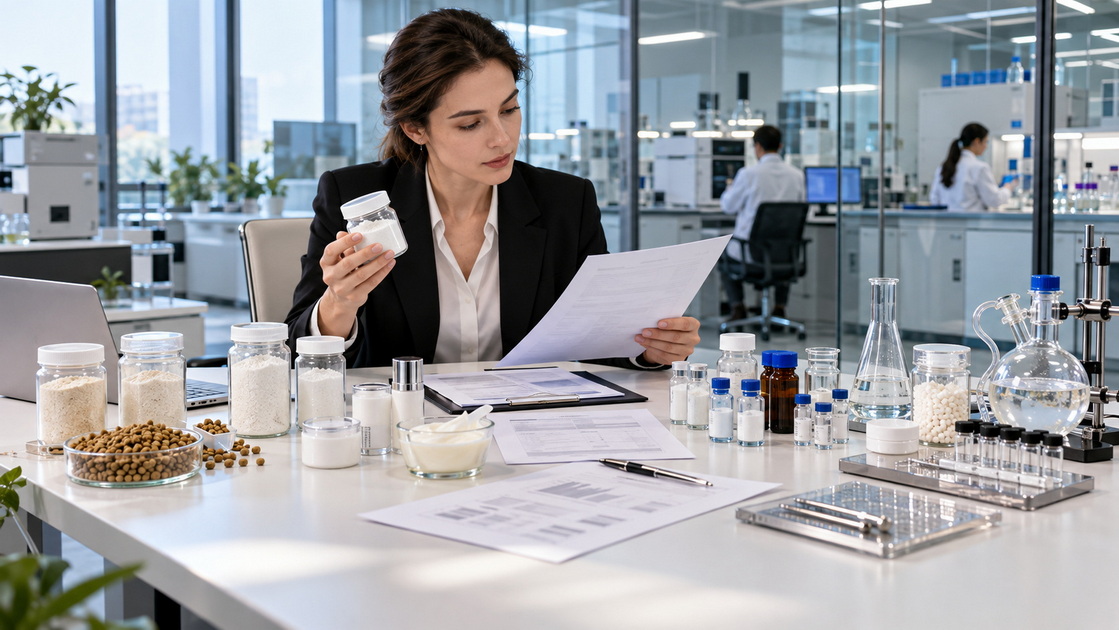
New technical section: Procurement teams often place purity percentages from different quotations into one comparison column. The columns may not measure the same thing.
For an unprotected amino acid, clarify its chemical and salt form, assay basis, water content, optical identity where relevant, and specified impurities. For a protected building block, identify the protecting groups and the stereochemical form. For a finished peptide, distinguish chromatographic purity from identity, net peptide content, and other required attributes.
The L- and D-forms deserve particular attention in peptide research. Published analytical work describes methods for measuring enantiomeric purity of L-amino acids, and peptide-analysis guidance notes that incorrect stereoisomers can be relevant impurities. A quoted percentage that does not distinguish the intended enantiomer may be inadequate for a stereochemically sensitive project.
A practical RFQ should therefore name:
- Exact substance: Full chemical name, relevant CAS number, and structural reference.
- Form: Free amino acid, specified salt, protected derivative, liquid solution, or mixture.
- Grade and use: Research, cosmetic-formulation development, feed, food, or a separately justified pharmaceutical application.
- Test basis: Which methods establish identity, assay, chirality, water, and relevant impurities.
- Packaging: Container size, moisture protection, tamper evidence, and lot coding.
- Commercial terms: MOQ, sample quantity, manufacturing site, lead time, and change-notification process.
ADM's liquid-lysine offering illustrates why "lysine price per kilogram" can be a weak comparison. A liquid and a dry product differ in concentration, transport, storage, dosing equipment, and landed cost. Similarly, feed-grade DL-methionine is not an L-methionine research reagent. Normalize quotations against the usable form and stated assay before ranking price.
A successful laboratory sample does not guarantee that the commercial lot uses the same process, site, or specification. Ask for the manufacturer and site, approved specification revision, lot number, and written notification before material or process changes. Keep a retained sample where appropriate and define how discrepancies will be investigated.
An amino acid suitable for a cosmetics formulation project does not prove that the eventual cosmetic is safe or that an anti-aging claim is substantiated. The U.S. FDA states that firms marketing cosmetics are responsible for product safety and proper labeling, and that the responsible person must maintain adequate safety-substantiation records for the finished cosmetic. Ingredient documentation supports that work; it does not replace it.
1. Define the use and grade. Decide whether you need a feed ingredient, cosmetic development material, research reagent, protected building block, or finished peptide.
2. Screen the actual producer. Identify the legal contracting entity, factory or synthesis site, and any distributor between them.
3. Request matching documents. Obtain a current specification and a lot-specific certificate of analysis, plus the safety and transport information relevant to the product and destination.
4. Approve an application test. Evaluate the sample against the buyer's analytical method or formulation process—not appearance alone.
5. Audit critical risks. Review traceability, equipment and testing responsibilities, handling of failed lots, and change control. Increase scrutiny as the application becomes more regulated or sensitive.
6. Pilot a commercial-sized order. Confirm that the bulk lot matches the approved material before converting a sample success into a long-term contract.
7. Score total supply performance. Track accepted-lot rate, deviation response, documentation completeness, lead-time reliability, and landed cost.
This is where a smaller specialist can compete with a large commodity supplier: not by claiming to be bigger, but by giving a buyer responsive technical communication and a clearly controlled custom project. Any such advantage—including Rchemsell's stated flexibility—should be demonstrated in the pilot, not assumed from marketing copy.
There is no single "best amino acid supplier" for every buyer. Feed-grade fermentation volume, cosmetic ingredient development, research reagents, protected amino acids, and finished custom peptides are different purchases. Use the ten profiles as routes into the market, then qualify the specific material, manufacturing site, batch, and intended use.
No. Ask what "99%" measures, which method produced the result, and whether the exact material and grade meet the application's requirements. A feed-grade percentage is not a pharmaceutical qualification, and ingredient purity alone does not substantiate a finished cosmetic's safety.
State the intended stereochemical form in the purchase order and request a suitable enantiomeric-identity or purity method and lot result where relevant. Non-chiral purity information alone may not resolve the distinction.
No. It is a different chemical building block with a specified protecting-group arrangement for synthesis. Send the complete derivative name and structure when sourcing peptide materials.
Possibly, but never infer it. Confirm the exact free or protected amino acid, manufacturing site, grade, MOQ, and quality system. Rchemsell's public positioning primarily concerns finished research and cosmetic peptides and custom synthesis, not verified commodity amino acid output.
It should identify the supplier, product, lot, specification, tested results, methods, dates, and authorized release appropriate to the purchase. Ask for supporting chromatograms or other records when a critical result needs review. A generic sample certificate is not evidence for the lot being shipped.
1. Biorunstar, "[Best 10 amino acids Suppliers in the world 2025]". Original article reviewed; its ranking and unfilled company-history placeholders were not treated as verified facts. [biorunstar]
2. Grand View Research, "[Amino Acids Market Size & Share]". 2024 market estimate, regional share, and forecast; figures are the research publisher's estimates. [grandviewresearch]
3. Ajinomoto, "[How Amino Acids Are Made]" and "[Healthcare and Others]". Fermentation and supplier-described application scope. [ajinomoto]
4. [CJ BIO BestAmino], [Evonik Amino Acids], [ADM Amino Acids for Animal Feed], and [Meihua Livestock Nutrition]. Supplier-described feed portfolios and product forms. [evonik]
5. ADM, "[ADM to End Production of Dry Lysine in Early 2021]". Historical product-format change that should be checked against current availability. [investors.adm]
6. [AMINO GmbH] and [AMINO Products]. Company-described production history and application categories. [amino]
7. Merck, "[Building Blocks for Solid Phase Peptide Synthesis]" and Iris Biotech, "[The 20 Fmoc Standard Amino Acids]". Protected amino acid ranges and their relevance to peptide synthesis. [merckmillipore]
8. [Rchemsell]. Company-provided statements about research and cosmetic peptides, custom synthesis, analytical testing, and packaging; not independently audited here. [rchemsell]
9. "A simple, efficient and general HPLC method for determination of enantiomeric purity of L-amino acids," [PubMed record], and BioPharmaSpec, "[L/D-Amino Acids: Differences and Importance]". Analytical context for stereochemical verification. [pubmed.ncbi.nlm.nih]
10. U.S. Food and Drug Administration, "[Cosmetics & U.S. Law]" and "[Modernization of Cosmetics Regulation Act of 2022]". Finished-product safety and substantiation responsibilities. [fda]


