
Views: 245 Author: Rchemsell Publish Time: 2026-09-28 Origin: Site


Content Menu
● Why France Matters to Semaglutide Buyers
● How We Selected the Companies
● Six Suppliers and Manufacturing Partners
>> 1. Rchemsell — International Research-Supply Alternative
>> 2. Novo Nordisk — Finished-Drug Manufacturing in Chartres
>> 3. PolyPeptide Group — GMP Peptide Manufacturing in Strasbourg
>> 4. GENEPEP — Early-Stage Peptide Research in Montpellier
>> 5. SB-PEPTIDE — In-House Custom Synthesis Near Grenoble
>> 6. ProteoGenix — Flexible Custom Peptide Projects
● Capacity, MOQ, and Compliance Compared
● What a Semaglutide Specification Must Cover
● Buyer's Guide: From Shortlist to Repeat Order
>> 1. Separate the Supply-Chain Roles
>> 2. Verify the Legal Entity and Site
>> 3. Run a Three-Stage Sample Review
>> 5. Put Continuity in the Contract
● The Avoidable Pitfall: "99% Pure" but Not 99% Content
>> 1. How do I check whether a supplier's GMP certificate is still relevant?
>> 2. Does a French company's address mean semaglutide is made in France?
>> 3. Can I use a research-peptide COA to qualify a GMP semaglutide API?
>> 4. What if a supplier quotes a lower MOQ but no annual capacity?
>> 5. Is semaglutide sodium interchangeable with the ingredient in approved semaglutide drugs?
A procurement search for semaglutide manufacturers and suppliers in France can produce a misleadingly uniform list. In reality, a company filling a licensed medicine in France, a GMP peptide CDMO, and a laboratory-scale custom synthesis provider solve very different problems. This guide compares six relevant organizations, including one China-based supplier serving international buyers, while identifying what each can—and cannot—be verified to supply.
Our selection considers documented French operations, peptide or semaglutide relevance, quality systems, analytical capability, scale, and procurement fit. It is not a ranking of approved semaglutide API manufacturers. Public information does not establish that every company below currently manufactures semaglutide API, offers it for sale, or accepts third-party semaglutide orders.
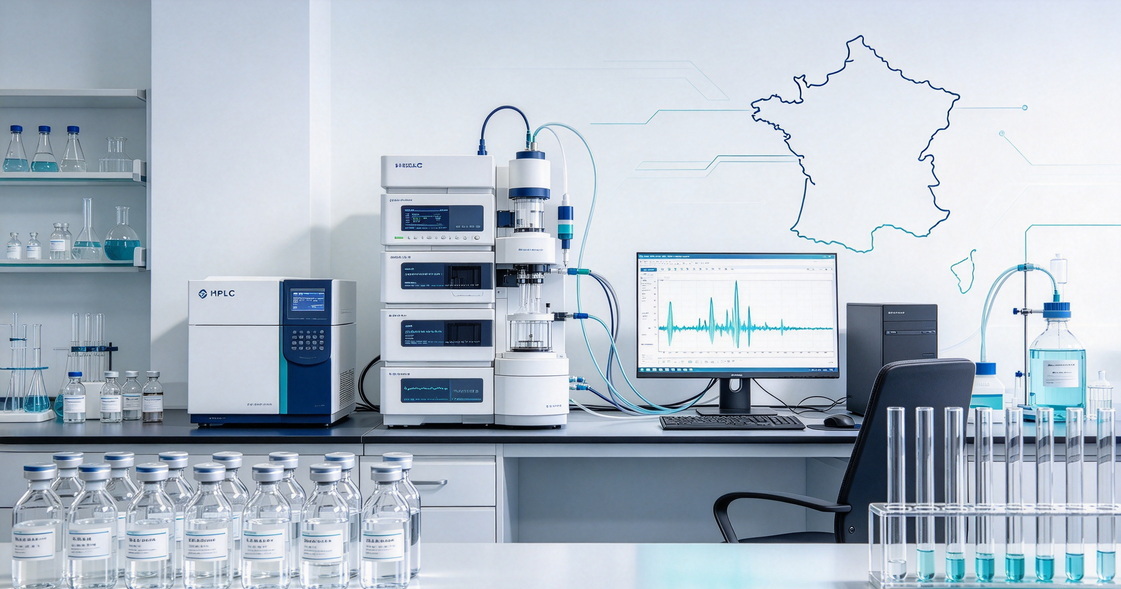
France has a substantial pharmaceutical manufacturing base and a network of peptide specialists. A 2026 U.S. Commercial Service country guide reports approximately $41 billion in French pharmaceutical exports in 2024. That figure describes pharmaceuticals overall; it is not a semaglutide export total.
The most prominent semaglutide-related manufacturing project is Novo Nordisk's expansion in Chartres. Its investor presentation identifies the French investment as fill/finish capacity, not proof that the site synthesizes semaglutide API. Elsewhere, French peptide companies offer services ranging from research synthesis to GMP manufacturing. Buyers should therefore choose the "stage of the supply chain" before choosing a company.
A published market estimate values France's broader peptide synthesis market at $29.6 million in 2024 and projects $44.9 million by 2029. That forecast is useful context, but it should not be described as measured semaglutide production or as a verified 2026 sales figure.
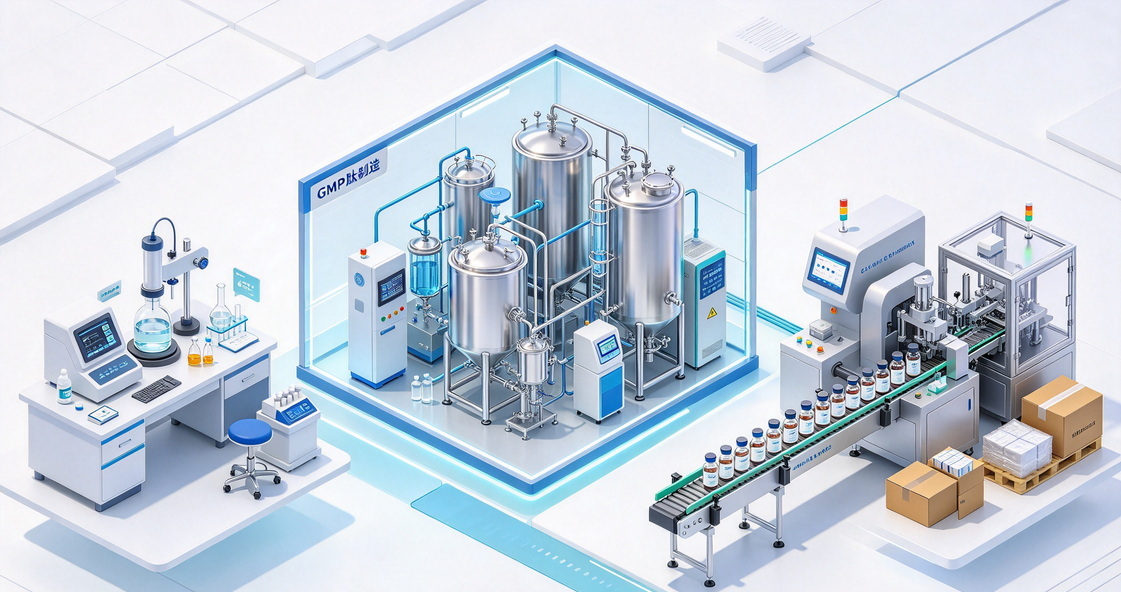
The list uses five procurement criteria:
1. Operational relevance: Is there a documented French site, or a clearly identified international supplier that serves buyers sourcing for France?
2. Product scope: Does the company document semaglutide-related activity, peptide manufacturing, or credible custom synthesis capability?
3. Quality evidence: Are its testing methods, GMP activities, or regulatory boundaries described publicly?
4. Scale fit: Is the organization better suited to research samples, development work, clinical supply, or finished-drug operations?
5. Disclosure: What information—particularly semaglutide availability, MOQ, capacity, and certification scope—still requires a direct quotation or audit?
Important distinction: Rchemsell appears first as a disclosed, China-based "alternative for research procurement". It is not a manufacturer in France, and placing it first does not indicate that it outranks the French facilities on GMP status, capacity, or regulatory approvals.
Location and founding year: China; founding year not independently verified.
Rchemsell describes itself as a manufacturer of research and cosmetic peptides and lists semaglutide among the products on its website. It states that its peptides reach 98%–99% purity and that it provides HPLC and mass-spectrometry testing, certificates of analysis, custom synthesis, bulk supply, small trial orders, lyophilized packaging, and international shipping. Its stated customer groups include laboratories, distributors, and biotechnology businesses.
For a small laboratory or distributor, the potential fit is flexible project specification and sample-to-bulk discussions. The company has also supplied information for this article about OEM and ODM support. Buyers should request a written scope for any private-label packaging, documentation, or custom sequence work rather than assume that every service applies to semaglutide.
Verification limit: The public material reviewed does not establish Rchemsell's founding year, validated semaglutide-specific production capacity, GMP API authorization, French manufacturing presence, or authorization to supply finished medicines. Its 98%–99% figure is a company claim, not a substitute for a lot-specific report. This profile should not be read as an endorsement for clinical use or as evidence of a lower verified total cost than the other companies.
Location and founding year: Danish company founded in 1923; its Chartres production site was established in 1961. Market focus: Approved medicines and the company's own global product portfolio.
Novo Nordisk is the clearest semaglutide-specific manufacturing connection on this list. The company announced an investment of more than DKK 16 billion, approximately €2.1 billion, to expand Chartres. Its 2025 investor presentation classifies the project as fill/finish. That makes Chartres relevant to buyers studying French drug-product capacity, but not a publicly established source of independently purchasable semaglutide API.
Buyer fit: Understanding finished-product capacity and the originator's supply chain. OEM/ODM fit: No open third-party semaglutide OEM or ODM service is established by the sources reviewed. A procurement manager should not send Novo Nordisk the same RFQ intended for a custom research-peptide laboratory.
Location and founding year: Swiss-headquartered group formally established in 1996, with manufacturing roots dating to 1952; French facility in Strasbourg. Market focus: Pharmaceutical and biotechnology customers requiring peptide development and GMP supply.
PolyPeptide's Strasbourg site publishes unusually concrete site-level information: approximately 6,500 m² of facilities, including approximately 3,500 m² dedicated to GMP manufacturing; seven independent synthesis units; solid-phase reactors up to 200 L; solution-phase capacity up to 650 L; and eight purification and isolation suites. These are facility capabilities, not stated semaglutide output figures.
The site says its main business is GMP-grade peptides for clinical or commercial applications. Its public page also notes a French regulator inspection and a U.S. FDA inspection in 2009. Neither statement alone establishes the site's "current" GMP certificate scope or that it makes semaglutide. OEM/ODM fit: Bespoke CDMO development and manufacturing is the relevant model; consumer-style private labeling is not the documented focus.
Location and founding year: France; founded in 2003. Market focus: Biotechnology and pharmaceutical research teams needing discovery-stage peptides and development support.
GENEPEP specializes in peptide design, synthesis, optimization, and research-grade samples. Its collaboration with CordenPharma creates a documented route from French discovery work toward early clinical GMP manufacturing at CordenPharma's Frankfurt site in Germany. CordenPharma explicitly describes GENEPEP's early-stage work as non-GMP. That geographic and quality distinction matters in any shortlist presented as "French semaglutide manufacturing."
GENEPEP is a credible company to contact about the "feasibility" of a complex peptide research brief. OEM/ODM fit: Custom synthesis and fee-for-service or FTE research programs are documented; an off-the-shelf semaglutide API catalog, semaglutide-specific capacity, and a private-label finished medicine service are not established by the reviewed sources.
Location and founding year: French operations near Grenoble; a precise company founding year was not confirmed from the company pages reviewed. Market focus: Public laboratories, pharmaceutical and biotechnology teams, distributors, and cosmetic research businesses.
SB-PEPTIDE says it produces and controls its peptides in-house in France. It describes multiple synthesizers, HPLC, LC-MS, ESI-TOF MS, and lyophilizers, and reports custom work on peptides from 2 to more than 120 amino acids. Its company history describes work as a CMO/CRO or OEM. These are useful signals for buyers seeking a France-made custom research project rather than an assumed commercial semaglutide API source.
OEM/ODM fit: OEM and custom synthesis are publicly stated; semaglutide-specific availability, MOQ, annual capacity, and any GMP authorization for the proposed product require direct confirmation. Its laboratory equipment list should not be converted into an unsupported claim about commercial-scale semaglutide production.
Location and founding year: French company founded in 2003, based in the Strasbourg area. Market focus: Research organizations and biotechnology teams seeking custom peptides, complex sequences, and related life-science services.
ProteoGenix advertises peptide synthesis from 1 mg to 1 kg, purity options up to ≥98%, modified sequences, and a starting lead time of 10 business days. Its ordering information says quoted quantities are gross weights unless otherwise stated and offers additional analyses, including peptide-content and water-content tests. These details make it particularly useful for comparing a small research RFQ with a more demanding analytical specification.
OEM/ODM fit: Custom project specifications are documented; semaglutide-specific GMP API supply or finished-drug private labeling is not established. Its advertised price per amino acid, minimum charge, and starting lead time apply to stated service conditions—not automatically to a modified semaglutide project.
| Organization | Relevant role | Public capacity information | Public MOQ information | Quality or certification information |
|---|---|---|---|---|
| Rchemsell | China-based research-peptide and custom-synthesis option | No verified semaglutide-specific capacity | Small trial orders offered; numerical semaglutide MOQ not published | Company states HPLC/MS, COA, and 98%–99% purity; GMP scope not established. |
| Novo Nordisk, Chartres | Semaglutide-related finished-drug expansion | Investment above DKK 16 billion; public presentation identifies fill/finish | Third-party MOQ not applicable publicly | Originator finished-drug operations; not an open API quote or OEM listing.novonordisk+1 |
| PolyPeptide, Strasbourg | GMP peptide CDMO | Seven synthesis units; reactors up to 200 L solid phase and 650 L solution phase | Not publicly stated for semaglutide | GMP-focused site; confirm current certificate and applicable scope. |
| GENEPEP | Non-GMP discovery and research synthesis | Gram-scale development samples described in its CDMO collaboration | Semaglutide MOQ not published | Research testing reports; later GMP work described at its partner’s German site. |
| SB-PEPTIDE | France-made custom research peptides | In-house synthesis and analysis equipment disclosed; semaglutide output not disclosed | Semaglutide MOQ not published | HPLC and mass-spectrometry capabilities stated; request project-specific quality scope. |
| ProteoGenix | Custom peptides and analytical options | Advertises orders from 1 mg to 1 kg; this is a service range, not annual capacity | Minimum charge advertised, but no semaglutide-specific MOQ | HPLC/MS profiles and COA described for applicable orders; confirm GMP status for the actual project. |
Capacity is not MOQ. A reactor size, an order-size range, and a yearly quantity available for a specific peptide measure three different things. Do not place them in a purchasing spreadsheet as though they were interchangeable.
Semaglutide is not a generic, unmodified short peptide. Its sequence, site-specific modification, lipid-linked structure, and impurity profile make identity and process control central purchasing questions. For pharmaceutical API, the relevant discussion is documented manufacturing and control under applicable GMP requirements, including the quality-system principles in ICH Q7. A supplier's general claim of "high purity" does not establish GMP suitability.
A technically useful request should specify:
- Intended use: Research material, analytical reference, development intermediate, GMP API, or finished medicine.
- Molecular identity: Exact requested form and an appropriate identity method, such as mass spectrometry.
- Purity and content: HPLC method and result, plus a separate measure of peptide content or assay when needed.
- Impurities: Limits and methods relevant to the proposed process, including related peptides and residual materials.
- Quality system: Manufacturing site, applicable GMP scope, batch release process, and change-control expectations.
- Supply terms: MOQ, quoted lead time, reserved capacity, packaging, shipment conditions, and destination-market requirements.
For semaglutide, CE marking and RoHS are not substitutes for pharmaceutical GMP documentation. Those examples belong to other regulatory contexts; requesting them as the primary proof of API quality would send the supplier qualification process in the wrong direction. ICH Q7 and the applicable site authorization are more relevant starting points for an API procurement review.
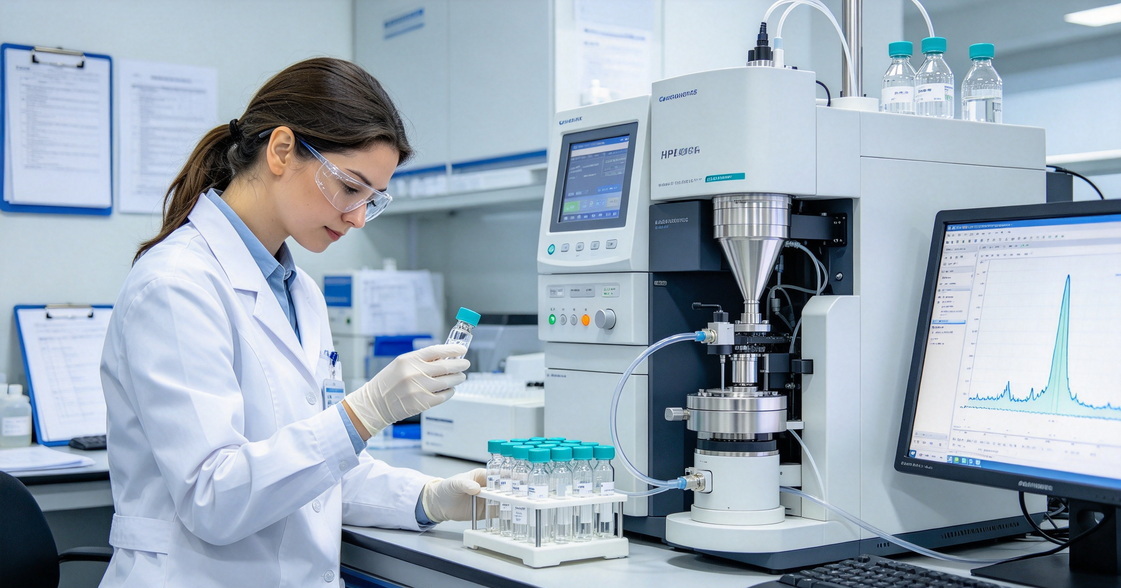
Before contacting a company, decide whether you need research material, a custom synthesis partner, GMP API, sterile drug-product manufacturing, or authorized finished medicine. Novo Nordisk's Chartres investment and GENEPEP's research services are both relevant to a semaglutide market map, but they are not interchangeable sourcing offers.
Ask which legal entity signs the contract, which site manufactures the material, which laboratory releases it, and who handles export. For an EU-regulated pharmaceutical project, compare relevant authorizations and GMP records with EudraGMDP. Match the site address and activity scope—not just the company name—to the quotation.
First, obtain the proposed specification and a representative COA format. Second, order a permissible evaluation sample under clearly stated terms and conduct independent identity, purity, and content testing where appropriate. Third, compare the approved sample with the first production lot using agreed acceptance criteria. A passing sample does not automatically qualify a future lot.
Request the proposed storage conditions, packaging configuration, shipping lane, customs documentation, and a procedure for temperature excursions or damaged packs. Define who investigates a delayed shipment and who pays for retesting or replacement. Logistics claims should be assessed against the specific material and route, not a generic promise of "safe worldwide delivery."
For repeat orders, record the manufacturing site, agreed specification, notification period for changes, batch-document package, complaint process, and realistic forecast window. An attractive sample price is less useful if the supplier cannot reproduce the same quality profile six months later.
A supplier may report 99% chromatographic purity while quoting the filled vial by gross lyophilized weight. Those figures describe different properties. The vial can contain a highly pure principal peptide peak while water, counter-ions, or other mass components affect the amount of peptide actually present by weight. ProteoGenix explicitly tells customers that its stated quantities are gross weights unless otherwise specified and offers separate peptide-content and water-content analyses.
This is the practical trap to check before negotiating a unit price: require the quote and COA to say whether "mg" means gross fill weight or measured peptide content. Specify the acceptable test method and reporting basis in writing. Do not infer vial content from an HPLC area percentage, and do not treat a research-grade result as evidence of sterile finished-drug quality.
A second identity trap deserves equal attention. The U.S. FDA states that semaglutide sodium and semaglutide acetate are different active ingredients from the form used in approved drugs and raises concerns about their use in compounding. A buyer should therefore verify the exact material being offered rather than accept "semaglutide" as a complete specification.
France offers credible partners across finished-drug operations, GMP peptide manufacturing, and research synthesis, but the publicly documented companies on this list do not all sell the same product or work to the same standard. Compare them by actual site and intended use, then request semaglutide-specific capacity, MOQ, analytical records, and certification scope before naming a preferred long-term supplier.
For an authorized laboratory research inquiry, send Rchemsell your intended material specification, quantity, testing requirements, and destination and ask for a written quotation with a representative documentation package. For GMP API or finished medicine, begin instead with suppliers whose "specific site and product scope" meet your regulatory requirements.
Search EudraGMDP for the manufacturing site, review the issuing authority, activities covered, inspection information, and any non-compliance statement. Then ask the supplier for the current documents applicable to the "specific material and site". A photograph of an old certificate or a group-wide claim is not enough.
No. Confirm the actual synthesis, purification, testing, packaging, and release sites. GENEPEP's documented collaboration, for example, places its discovery activities in France and describes early clinical GMP manufacturing at a partner site in Germany.
No. A research COA can help evaluate the tested lot against stated research specifications, but it does not establish API GMP compliance or suitability for human use. Qualification must address the manufacturing site, quality system, validated controls, and the intended regulatory pathway.
Ask for the minimum order, lead time, batch-size range, realistic annual allocation, and process for repeat lots separately. A small MOQ only tells you the supplier may accept an initial order; it does not prove dependable commercial supply.
Do not assume interchangeability. The FDA identifies semaglutide sodium and acetate as different active ingredients from the form in approved drugs and says it lacks information establishing equivalent chemical and pharmacological properties for those salts.
1. U.S. International Trade Administration. [France: Healthcare and Life Sciences]. Published May 2026; source for national pharmaceutical export and industry context. [trade]
2. MarketsandMarkets. [France Peptide Synthesis Market]. Source for the 2024 market estimate and 2029 projection; this is a broader peptide-synthesis estimate, not semaglutide output. [marketsandmarkets]
3. Novo Nordisk. [Full Year 2025 Investor Presentation]. Source identifying the Chartres project as fill/finish capacity. [novonordisk]
4. Novo Nordisk. [Announcement of the Chartres Expansion]. Reproduced company announcement; source for investment, company founding year, and Chartres site history. [inderes]
5. PolyPeptide Group. [Strasbourg Manufacturing Site] and [Company History]. Sources for site capabilities, activities, and group history. [polypeptide]
6. CordenPharma. [GENEPEP Collaboration Announcement]. Source for GENEPEP's founding year, non-GMP discovery role, and German GMP partner site. [cordenpharma]
7. SB-PEPTIDE. [Peptides Made in France] and [Company History]. Sources for Grenoble-area operations, equipment, customer groups, and OEM services. [sb-peptide]
8. ProteoGenix. [Company Website] and [Custom Peptide Synthesis Services]. Sources for founding year, quoted service range, testing options, and gross-weight disclosure. [proteogenix]
9. Rchemsell. [Company Website]. Source for its self-reported product range, purity, testing, small orders, and custom services. Company claims require buyer verification against lot-specific records. [rchemsell]
10. European Medicines Agency. [EudraGMDP Database] and [ICH Q7: GMP for Active Pharmaceutical Ingredients]. Regulatory sources for site and API quality-system checks. [ema.europa]
11. U.S. Food and Drug Administration. [FDA's Concerns With Unapproved GLP-1 Drugs Used for Weight Loss]. Source for concerns about unapproved products, shipping, and semaglutide salt forms. [fda]
12. Elsayed YY, et al. [Regulatory Guidelines for the Analysis of Therapeutic Peptides and Proteins]. "Journal of Peptide Science", 2025; source for peptide-characterization context. [pmc.ncbi.nlm.nih]


