
Views: 0 Author: Site Editor Publish Time: 2026-11-04 Origin: Site


Research Applications
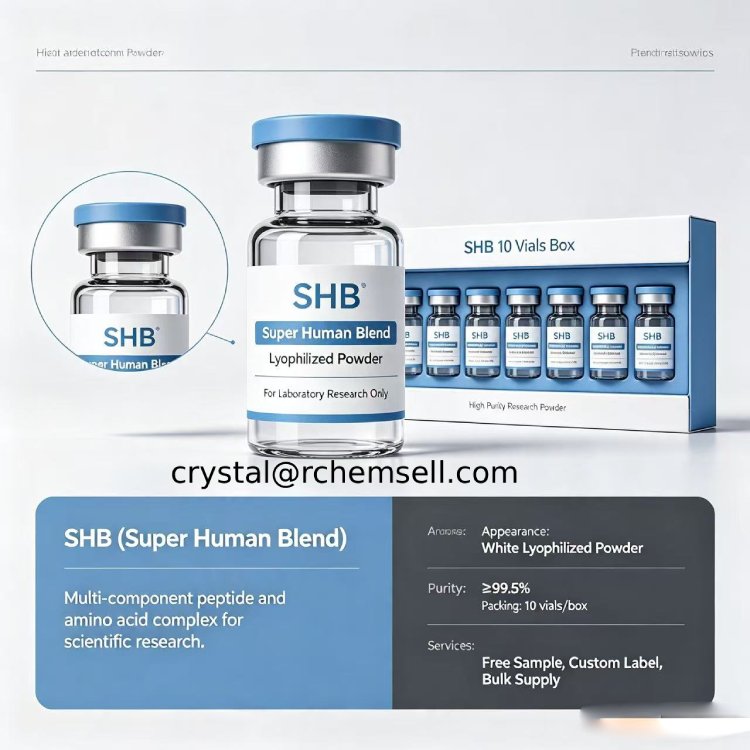
SHB contains nine high-purity bioactive ingredients. Labs commonly use 5mg /10mg vials for these research directions:
1. Blood circulation & nitric oxide pathway research
L-Arginine, L-Citrulline and L-Ornithine inside SHB support in-vitro experiments of endothelial cell function and NO signal regulation.
2. Collagen synthesis and cell repair research
L-Lysine, L-Proline and L-Glutamine are widely used for tissue cell culture and protein synthesis related studies.
3. Antioxidant and cellular energy metabolism research
NAC, L-Taurine and L-Carnitine help researchers explore oxidative stress and fat metabolism in cell models.
The 5mg vial is preferred for preliminary screening and pilot trials. The 10mg vial is more cost-effective for repeated testing and multi-batch experimental groups.
Market Status & Market Share
In the global research peptide raw material market, compound blends like SHB occupy a fast-growing niche segment.
• Among SHB vial products, 10mg per vial takes the major share (roughly 65–70%), because most biotech labs need repeated replicates.
• 5mg vial accounts for about 30–35% of SHB sales, mainly purchased by university labs and small research teams for initial feasibility testing.
Compared with single peptides, compound blends reduce researchers’ manual formula preparation work. Global demand keeps rising. Buyers value batch consistency, free sample service and custom packaging.
Commercial Prospect
More academic institutions and biotech companies prefer ready-made pre-mixed peptide/amino acid blends. 5mg and 10mg SHB lyophilized vials remain mainstream choices. Suppliers that can provide free samples and custom labeling gain more competitive advantages in this niche research raw material market.
Conclusion
SHB 5mg and 10mg vials serve distinct lab research scenarios. 10mg dominates market volume, while 5mg is widely used for early-stage exploratory research. As preclinical cell and metabolic research expands, demand for this compound blend will continue to grow. We offer free samples and custom service for bulk research orders.


