
Views: 217 Author: Rchemsell Publish Time: 2026-09-01 Origin: Site


Content Menu
● How We Evaluated Semaglutide Manufacturers in China
>> Supplier Selection Criteria
● China's Peptide Manufacturing Ecosystem
● Top 10 Semaglutide Manufacturers in China
>> 1. Rchemsell
>> 2. Hangzhou Thinheal Pharma Tech Co., Ltd.
>> 3. Hybio Pharmaceutical Co., Ltd.
>> 4. Sinoway Industrial Co., Ltd.
>> 5. Yifan Pharmaceutical Co., Ltd.
>> 6. Chengdu Shengnuo Biopharm Co., Ltd.
>> 7. Senova Technology Co., Ltd.
>> 8. Guizhou Utide Biotechnology Co., Ltd.
>> 9. Chongqing Sintaho Pharmaceutical Co., Ltd.
● Manufacturer Comparison Table
● Semaglutide Technical Quality Requirements
>> Research Grade vs Pharmaceutical API
>> Core Analytical Documents to Request
● The Internal Avoidance Guide: The Purity Trap
>> How to Avoid the Purity Trap
● Buyer's Guide: How to Verify a Chinese Semaglutide Supplier
>> Step 1: Confirm the Company and Production Site
>> Step 2: Verify Quality Certificates Properly
>> Step 3: Qualify a Sample Before the First Commercial Order
>> Step 4: Control Shipping and Customs Risk
>> Step 5: Build a Long-Term Quality Agreement
● Common Semaglutide Sourcing Mistakes
● FAQ
>> 1. Can a cosmetic or research-grade supplier provide pharmaceutical-grade semaglutide API?
>> 2. How should I verify whether a company is the real manufacturer rather than a trading company?
>> 3. What is the minimum documentation for a research-use-only peptide order?
>> 4. Why are semaglutide salt forms a sourcing concern?
>> 5. What should I ask before approving a supplier's MOQ?
Finding a semaglutide manufacturer in China requires more than comparing quoted purity, price, or lead time. For laboratory-research and cosmetic-industry buyers, supplier selection should begin with documented identity, traceable quality controls, intended-use alignment, transparent capacity, and compliant cross-border logistics—not marketing claims alone.
China has a broad peptide-development ecosystem spanning research suppliers, custom peptide synthesis providers, CDMOs, pharmaceutical API manufacturers, and distributors. But these categories are not interchangeable. A supplier of research-use-only peptide material is not automatically an appropriate pharmaceutical API source, and a "98%–99% purity" claim does not independently establish identity, impurity control, sterility, clinical suitability, regulatory status, or authorization for human use.
This guide is written for professional procurement teams seeking a long-term Chinese semaglutide supplier, custom peptide synthesis partner, or peptide-development service provider. It focuses on how to verify suppliers, assess quality documentation, compare service models, and avoid common sourcing failures.
Scope notice: Semaglutide is a prescription GLP-1 receptor agonist in regulated medical contexts. This article is a B2B sourcing and quality-evaluation guide. It is not medical advice, dosing guidance, or authorization to use research chemicals or cosmetic raw materials in humans. Buyers must comply with applicable pharmaceutical, cosmetic, import, customs, intellectual-property, and product-registration laws in their target markets.
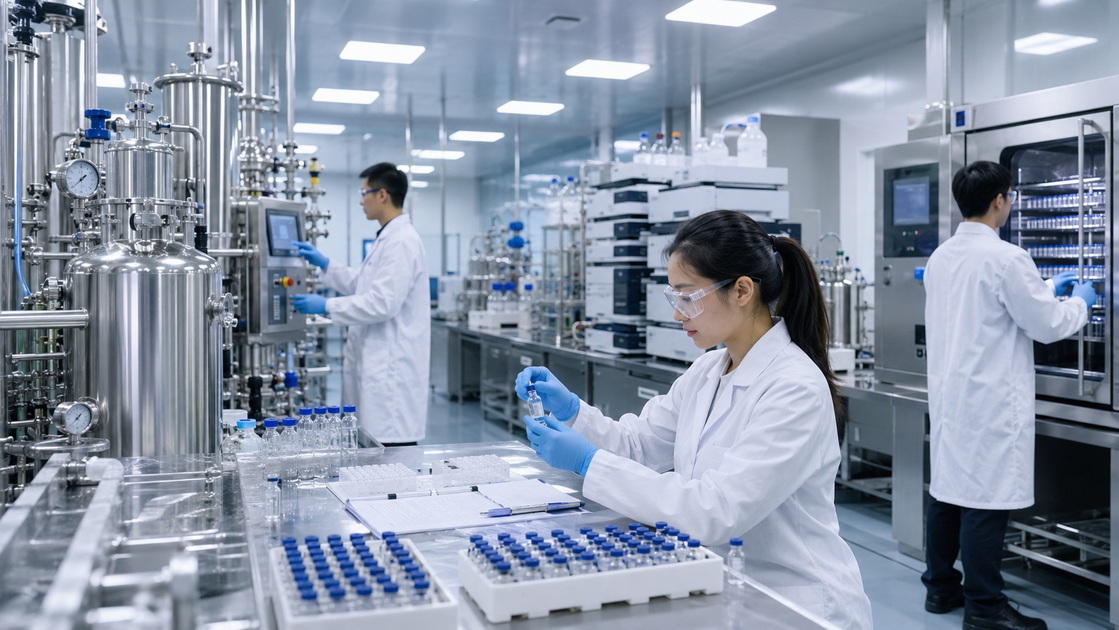
A credible "Top 10" list should be transparent about what it measures. Rather than treating marketing visibility as proof of quality, this guide evaluates companies using publicly available information and the evidence a serious buyer should request during qualification.
| Evaluation Area | What Buyers Should Verify | Why It Matters |
|---|---|---|
| Legal entity and facility | Chinese business registration, manufacturing-site address, export entity, ownership relationship | Confirms who actually produces and sells the material |
| Product category | Research-grade peptide, cosmetic raw material, GMP API, intermediate, or CDMO service | Prevents using material outside its intended and legally supported purpose |
| Identity testing | LC-MS, high-resolution MS where appropriate, amino-acid analysis or orthogonal identity methods | “Purity” alone does not prove the material is semaglutide |
| Purity and impurities | HPLC/UPLC chromatogram, method details, impurity profile, related substances, residual solvents | Distinguishes a headline assay figure from a complete quality package |
| Quality system | Current ISO/GMP documentation, audit scope, document issuer, certified site, expiry date | Determines whether quality claims can be independently reviewed |
| Manufacturing capability | Peptide-synthesis route, purification capacity, lyophilization, batch size, equipment, scale-up records | Helps assess reproducibility and supply continuity |
| Documentation | CoA, CoO, MSDS/SDS, specification, stability data, shipment records, batch traceability | Supports import, quality release, and investigations |
| Regulatory evidence | DMF/ASMF/CEP status where relevant, inspection history, market-specific documentation | Important for regulated pharmaceutical pathways |
| Technical support | Method transfer, custom synthesis, analytical development, sample response, deviation handling | Reveals whether the supplier can support a long-term project |
| Logistics capability | Temperature requirements, packaging validation, export documentation, customs support | Protects product quality and reduces border delays |
This framework is particularly important because online supplier directories may list a company as a producer, distributor, or both, while the applicable certificates, site scope, and manufacturing relationship vary by product. For semaglutide, Pharmaoffer's supplier directory lists multiple companies connected with China-origin supply, including producers and distributors, but buyers still need to verify each company's current role and documentation directly.
China's peptide supply chain has expanded from research-scale synthesis into larger-scale development and contract manufacturing. Relevant clusters include pharmaceutical and biotechnology hubs in Zhejiang, Jiangsu, Shanghai, Beijing, Guangdong, Sichuan, Chongqing, and Fujian. These regions combine peptide R&D teams, analytical laboratories, pharmaceutical intermediates, packaging partners, logistics providers, universities, and export infrastructure.
For B2B buyers, China can offer several advantages:
- Broad supplier choice across research, custom synthesis, API, and CDMO models
- Competitive pricing for selected development and production stages
- Fast communication for custom quotations and samples
- Flexible packaging and labeling options for legitimate research or industrial use
- Scale-up support for qualified projects
- Access to specialized solid-phase peptide synthesis, purification, and lyophilization capabilities
- Established export experience for chemical and life-science products
However, the same supplier density creates a verification challenge. A buyer must determine whether a company is:
- The actual manufacturer
- A contract manufacturer
- A trading company
- A distributor
- A research supplier
- A pharmaceutical API producer
- A custom peptide synthesis service provider
Procurement principle: The most useful supplier is not necessarily the company with the lowest quotation. It is the company that can prove what it makes, where it makes it, how it tests it, and what documentation it can maintain batch after batch.
The following list is a practical market map, not a medical endorsement, regulatory approval, or ranking of clinical suitability. Inclusion is based on public listings, stated peptide or semaglutide capability, market visibility, or CDMO relevance. Buyers must carry out independent supplier qualification, confirm current corporate and facility information, and verify that material is suitable for the buyer's lawful intended use.
Rchemsell is positioned as a China-based peptide research, manufacturing, testing, lyophilization, packaging, and transport-service provider serving laboratory research and cosmetic-industry customers. The company states that it supports peptide synthesis, quality testing, freeze-drying packaging, and shipment coordination, with listed product-purity targets of 98%–99% for its relevant product offerings.
For small and mid-sized brands, research teams, and custom-project buyers, Rchemsell's potential advantage is service flexibility. Instead of requiring a buyer to coordinate separate vendors for synthesis, analytical testing, lyophilization, packaging, and delivery, a one-stop peptide-service model can simplify project management.
Core strengths to verify during qualification:
- Custom peptide synthesis scope
- Analytical method and instrument availability
- Batch-specific CoA and chromatograms
- Lyophilization and moisture-control process
- Packaging format and labeling flexibility
- Sample-to-scale communication process
- Export-document support
- Minimum order quantity for custom peptide projects
- Change-control and deviation-response procedures
Primary market focus: Laboratory research and cosmetic-industry applications, based on the company profile provided for this guide.
OEM/ODM relevance: Custom peptide synthesis, private-label packaging discussions where legally applicable, customized purity targets, packaging formats, and project-level technical support.
Buyer caution: A stated purity range of 98%–99% should be evaluated with the underlying analytical method, batch chromatogram, identity confirmation, impurity information, and intended-use documentation. It should not be interpreted as evidence of pharmaceutical-grade suitability without the appropriate validated GMP and regulatory evidence.
Hangzhou Thinheal Pharma Tech publicly describes itself as a peptide-biotechnology company founded in 2019, with R&D and production locations in Hangzhou and Shaoxing. It states that it provides semaglutide raw materials and peptide industrialization services, including research outsourcing, pilot-scale work, and commercial manufacturing.
Its public materials claim GMP quality management, semaglutide-related export documentation, and FDA DMF filing work. These statements should be independently verified through current documents, applicable regulatory pathways, file-holder identity, and the scope of the cited filing before any regulated procurement decision.
Core strengths to verify:
- Exact manufacturing site for the purchased batch
- Current GMP certificate and certificate scope
- DMF type, holder, status, and customer-access process
- Scale-up history for long-chain modified peptides
- Batch-size range and lead-time commitments
- Analytical and impurity-control package
- Change-control procedure for raw materials and synthesis route
Primary markets: Publicly stated global pharmaceutical and peptide-development customers.
OEM/ODM relevance: Custom peptide CDMO services from research-stage development to pilot and commercial manufacturing.
Hybio Pharmaceutical is a peptide-focused company with a visible public presence in the Chinese peptide sector. It is listed by supplier directories among companies offering China-origin semaglutide supply and has publicly promoted semaglutide API supply and quality-control positioning.
For buyers seeking an established peptide-sector participant, Hybio may be relevant for evaluating larger-scale peptide-development and pharmaceutical-oriented programs.
Core strengths to verify:
- Current manufacturing location and responsible legal entity
- Product-specific regulatory package
- GMP certificate scope for the relevant facility and dosage/API activity
- Finished batch analytical package
- Audit access or third-party audit availability
- API versus research-material classification
- Country-specific export and registration support
Primary markets: Peptide pharmaceutical and B2B supply markets, subject to direct confirmation.
OEM/ODM relevance: Potential custom-development and manufacturing discussions for qualified pharmaceutical or peptide projects, subject to product scope and contractual availability.
Sinoway Industrial is listed in semaglutide supplier directories as a China-origin producer and is active in pharmaceutical-intermediate, API, and CDMO-related markets. Its public content discusses the growth of peptide CDMO services and one-stop development-to-commercial production support.
Sinoway may be relevant for buyers looking for a broader pharmaceutical sourcing and development partner rather than a research-only peptide supplier.
Core strengths to verify:
- Actual manufacturing entity versus sales entity
- Semaglutide-specific production route and purification capability
- GMP/API qualification status for the relevant plant
- Process-development, analytical-development, and validation support
- Supply-chain control for protected amino acids and critical raw materials
- Intellectual-property and confidentiality protections
Primary markets: International pharmaceutical and chemical customers, based on its public B2B positioning.
OEM/ODM relevance: API, intermediate, custom synthesis, and CDMO-oriented project support, subject to qualification.
Yifan Pharmaceutical is listed among China-origin semaglutide suppliers in industry directories. It is a larger pharmaceutical enterprise that may be relevant to buyers requiring formal quality systems, larger organizational capacity, and pharmaceutical supply-chain experience.
Core strengths to verify:
- Whether the company itself manufactures the quoted semaglutide material
- Site-specific GMP and product scope
- Current registration, filing, or audit documents where applicable
- Supply assurance and allocation policy
- Quality agreement format
- Pharmacovigilance and complaint-handling pathway if purchasing regulated material
Primary markets: Pharmaceutical markets; confirm exact market authorizations and product availability directly.
OEM/ODM relevance: May be better suited to structured pharmaceutical collaboration than small, low-MOQ custom projects. Buyers should confirm whether custom peptide services are currently offered.
Chengdu Shengnuo Biopharm is included in semaglutide supplier lists and is part of China's peptide and biopharmaceutical landscape. The Chengdu region has a growing life-sciences base, providing access to peptide R&D resources, scientific talent, and pharmaceutical manufacturing networks.
Core strengths to verify:
- Semaglutide-specific commercial versus research-scale capability
- Certificate status and manufacturing scope
- Process consistency across batches
- Purification and lyophilization capacity
- Lead time for pilot, scale-up, and commercial orders
- Export documentation and target-market experience
Primary markets: Pharmaceutical and biotechnology buyers, subject to direct confirmation.
OEM/ODM relevance: Potential peptide-development and custom-manufacturing projects; verify capacity and product scope.
Senova Technology is identified as a China-origin semaglutide producer in supplier directories, with GMP certification shown in some directory data. Directory information should be regarded as a starting point rather than a final qualification record.
Core strengths to verify:
- Validity and scope of GMP documentation
- The name and address of the certified facility
- The relation between the certificate holder and quoted supplier
- Product-specific CoA, chromatogram, and identity testing
- Exporter-of-record and customs documentation
- Batch release and complaint investigation procedures
Primary markets: International B2B supply, subject to direct confirmation.
OEM/ODM relevance: Potential custom or bulk supply, depending on verified capabilities and commercial terms.
Guizhou Utide Biotechnology appears in semaglutide supplier directories as a China-origin producer. Companies in regional biotechnology clusters can provide attractive development flexibility, but buyers should verify whether production is performed in-house or through a partner facility.
Core strengths to verify:
- In-house versus outsourced peptide production
- Batch-size capability
- Quality control equipment and methods
- Documentation turnaround time
- Stability and storage data
- Contract-manufacturing partner oversight, if applicable
Primary markets: Research, biotechnology, or pharmaceutical supply markets, subject to direct confirmation.
OEM/ODM relevance: Custom synthesis and project-specific supply discussions may be possible; verify available services before selection.
Chongqing Sintaho Pharmaceutical is listed by Pharmaoffer as a China-based semaglutide producer, with some directory records emphasizing CoA, ISO 9001, and MSDS documentation. Those documents can support initial screening, but ISO 9001 is not equivalent to GMP and does not independently establish pharmaceutical API compliance.
Core strengths to verify:
- Product grade and lawful intended-use classification
- Current quality-management certificate scope
- Identity and purity testing methodology
- Raw-material traceability
- Impurity and residual-solvent information
- Quality agreement and batch-release process
Primary markets: International B2B supply, subject to direct confirmation.
OEM/ODM relevance: Potential custom sourcing and production support, subject to capacity and quality-system review.
Apino Pharma is listed as a China-origin producer in semaglutide supplier directories, where its profile includes various documentation and certification categories. As with every directory listing, buyers should request current, product-specific records and verify them with the issuing body or applicable regulator.
Core strengths to verify:
- Semaglutide manufacturing site and product origin
- Actual manufacturer versus distributor role
- Certificate validity and facility scope
- API documentation package
- Batch-to-batch consistency data
- Auditing options and quality-agreement terms
Primary markets: International pharmaceutical sourcing and B2B supply, subject to direct confirmation.
OEM/ODM relevance: Potential API and pharmaceutical-sourcing services; confirm customized manufacturing availability, minimum batch size, and regulatory support.
Publicly verified, comparable figures for semaglutide output capacity and MOQ are not consistently available across all suppliers. Buyers should avoid treating unverified website figures as contractual capacity. The table below therefore uses a qualification-oriented format.
| Supplier | Publicly Stated or Directory-Listed Focus | Capacity Disclosure | MOQ Disclosure | Certification Evidence to Request | Best-Fit Buyer Profile |
|---|---|---|---|---|---|
| Rchemsell | Research, cosmetic, custom peptide services | Request directly | Request directly | Batch CoA, chromatogram, ISO/GMP scope if claimed, testing records | Small and mid-sized brands, labs, flexible custom projects |
| Hangzhou Thinheal Pharma Tech | Peptide API and CDMO | Public claims should be verified | Request directly | GMP scope, DMF evidence, export records, site details | Buyers needing scale-up and CDMO support |
| Hybio Pharmaceutical | Peptide pharmaceutical supply | Request directly | Request directly | Site GMP, API documentation, audit evidence | Pharmaceutical-oriented buyers |
| Sinoway Industrial | API, intermediate, CDMO | Request directly | Request directly | GMP scope, site proof, product dossier | Buyers seeking broad development support |
| Yifan Pharmaceutical | Pharmaceutical supply | Request directly | Request directly | Manufacturing-site evidence, quality agreement | Structured pharmaceutical buyers |
| Chengdu Shengnuo Biopharm | Peptide and biopharma supply | Request directly | Request directly | Product-specific CoA, facility and quality-system records | Peptide development programs |
| Senova Technology | Directory-listed producer | Request directly | Request directly | Current GMP scope, batch release records | Buyers requiring documented verification |
| Guizhou Utide Biotechnology | Directory-listed producer | Request directly | Request directly | In-house manufacturing proof, QC package | Flexible biotechnology sourcing |
| Chongqing Sintaho Pharmaceutical | Directory-listed producer | Request directly | Request directly | ISO/GMP distinction, CoA, MSDS, method details | Buyers conducting early-stage screening |
| Apino Pharma | Directory-listed producer | Request directly | Request directly | Product-specific quality package, site and certificate verification | API and pharma sourcing teams |
Critical point: No buyer should award a semaglutide project based on a stated "GMP," "FDA," "CE," or "RoHS" label alone. CE and RoHS do not apply to pharmaceutical APIs as evidence of drug-substance quality. For regulated pharmaceutical procurement, buyers should focus on the relevant GMP system, site inspection status, product-specific documentation, applicable DMF/ASMF/CEP information, and target-market regulatory requirements.
Semaglutide is a complex, modified peptide. Its synthesis typically involves controlled peptide-assembly steps, purification, identity confirmation, impurity control, and final handling under defined environmental and packaging conditions. The detailed chemistry and quality attributes needed depend on the intended use and applicable regulatory pathway.
This is the most important technical distinction for buyers.
| Category | Typical Purpose | Documentation Expectation | What It Does Not Mean |
|---|---|---|---|
| Research-use-only peptide | Laboratory research, analytical work, non-clinical investigation | CoA, identity test, purity test, storage information, SDS | Not approved for human use, injection, or therapeutic use |
| Cosmetic raw material | Lawful cosmetic R&D or manufacturing where permitted | Ingredient documentation, safety and quality records appropriate to market | Not automatically suitable for drug, injectable, or clinical use |
| Pharmaceutical API | Regulated drug-product development and manufacturing | cGMP evidence, validated methods, full impurity control, stability program, regulatory dossier support | Not automatically approved in every market or for every dosage form |
| CDMO development material | Process development, clinical development, scale-up, or commercial supply | Stage-appropriate quality system and agreed technical package | Not a substitute for market authorization |
The FDA has repeatedly warned that unapproved, counterfeit, and fraudulent compounded GLP-1 products can present quality and safety concerns. It also notes that certain products sold as semaglutide may contain the salt forms semaglutide sodium or semaglutide acetate, which are not the active ingredient in FDA-approved drugs.
For a research or industrial peptide purchase, request:
- Batch-specific Certificate of Analysis
- HPLC or UPLC chromatogram
- Method parameters and integration criteria
- Mass-spectrometry identity data
- Net peptide content or assay basis
- Water-content or moisture data where relevant
- Residual-solvent data where applicable
- Storage and shipping conditions
- Retest date or stability information
- Lot number and manufacturing date
- SDS/MSDS
- Sample retention and traceability policy
For a regulated API project, the expectation is substantially higher and should be defined in a quality agreement and regulatory strategy.
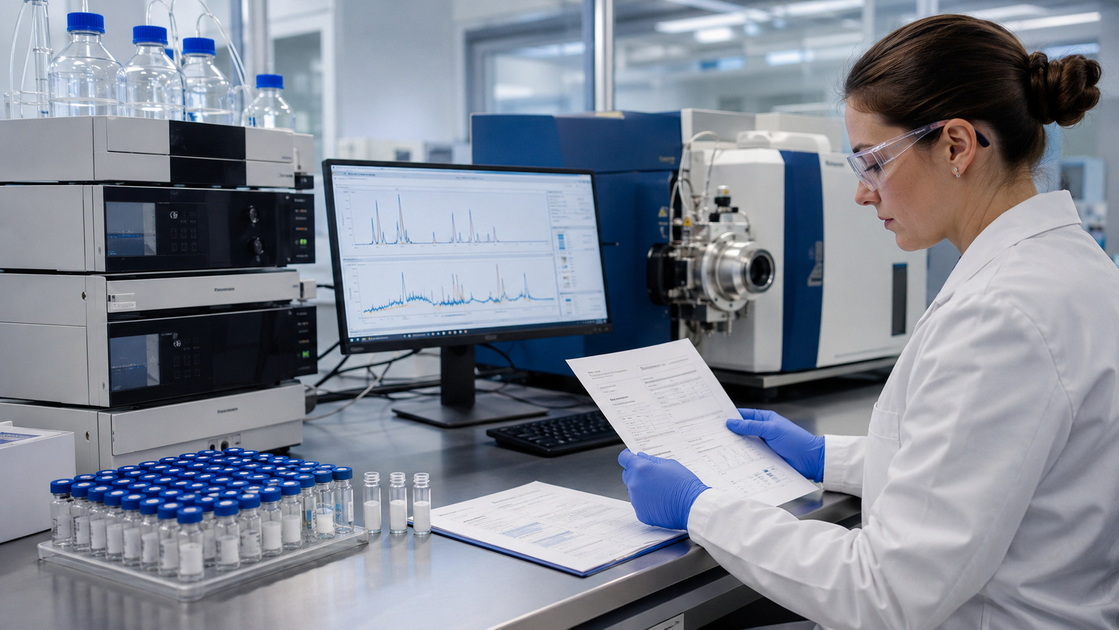
Some online chemical listings use terms such as CE or RoHS as broad marketing keywords. These designations are generally relevant to equipment, electronics, or product categories governed by specific European conformity rules. They are not appropriate substitutes for pharmaceutical GMP, drug-substance specifications, or regulatory authorization.
For semaglutide sourcing, ask about:
- Pharmaceutical GMP or relevant quality-system scope
- ICH-aligned quality approaches where applicable
- USP, Ph. Eur., or other applicable compendial expectations
- Certificate of Analysis and analytical-method validation status
- DMF or ASMF status where relevant
- Data integrity controls
- Change control
- Deviation and out-of-specification investigations
- Stability program
- Audit history and supplier qualification process
One of the most common but under-discussed sourcing failures is the purity trap.
A supplier may quote "99% purity" based on a single HPLC peak area. That number can be useful, but it may not answer critical questions:
- Is the major peak confirmed as the intended peptide by orthogonal identity testing?
- What are the unknown related substances?
- Was the chromatogram integrated consistently?
- Is the result measured on an "as-is" basis or corrected for water, counterion, and residual solvent?
- Does the batch contain truncated sequences, deletion impurities, oxidation products, or aggregation-related impurities?
- Are different salt forms or similar compounds being confused with the specified material?
- Is the material stable after shipping and reconstitution?
- Is the batch traceable to a defined production record?
A supplier that cannot provide a legible, batch-specific chromatogram, identity data, and a clear basis for its assay result should not be treated as qualified merely because its website says "99% purity."
1. Request a recent batch-specific CoA, not a generic sample certificate.
2. Ask for a full chromatogram with retention time, detector wavelength, method type, and integration details.
3. Request mass-spectrum identity evidence linked to the quoted batch or representative validated method.
4. Confirm whether purity is reported by area normalization, assay, or another basis.
5. Ask how water, salts, residual solvents, and counterions are handled in net-content calculations.
6. For repeat orders, compare the chromatographic profile and key quality values across at least three batches.
7. Place a small sample order, then send it to an independent analytical laboratory before approving commercial supply.
8. Define acceptance criteria, deviation handling, and replacement terms in a signed quality agreement.
Rarely stated but essential: The most expensive failure is not receiving a low-purity batch. It is receiving a batch that appears "99% pure" on paper but cannot be traced, reproduced, or defended during your own customer audit.
Ask for:
- Full legal company name in English and Chinese
- Unified Social Credit Code
- Registered address
- Actual manufacturing-site address
- Exporter-of-record information
- Manufacturing license, if applicable
- A live video factory tour or third-party audit
- Photos of production, purification, lyophilization, QC, and packaging areas
- Named technical and quality contacts
Do not assume that the company receiving payment is the same entity that manufactures the material.
A certificate should be checked for:
- Certificate number
- Issuing body
- Issue date and expiry date
- Scope of certification
- Name and address of the certified facility
- Product or activity covered
- Accreditation status of the issuing body
- Match between the certificate holder and the proposed supplier
For GMP claims, ask whether the certificate covers the exact site and activity relevant to your product. A GMP certificate for a different dosage form, facility, or affiliate does not automatically qualify a semaglutide API batch.
A professional sample process includes:
1. Written product specification
2. Defined intended use
3. Batch-specific CoA and analytical package
4. Independent identity and purity testing
5. Shipping-condition review
6. Internal technical evaluation
7. Supplier-response evaluation
8. Quality-agreement negotiation
9. Pilot order
10. Commercial approval only after satisfactory evidence
For high-risk or regulated projects, use a qualified third-party laboratory to verify identity, purity, and selected impurities. Your testing strategy should be designed by appropriately qualified analytical and regulatory professionals.
Peptide stability and compliance can be compromised during shipping. Discuss:
- Required storage temperature
- Freeze-dried versus solution form
- Temperature-monitoring needs
- Light and moisture protection
- Packaging validation
- Incoterms
- Customs classification
- SDS and invoice consistency
- Import permits or destination-market restrictions
- Insurance and temperature-excursion procedures
For pharmaceutical or clinical material, logistics must be validated under the appropriate quality system. For research material, buyers should still document chain of custody, receiving inspection, and storage conditions.

A serious supplier relationship should cover more than pricing. The agreement should define:
- Product specification
- Test methods
- Acceptance criteria
- Batch release documents
- Change-control notifications
- Deviation and CAPA process
- Complaint handling
- OOS investigation procedure
- Sample retention
- Confidentiality and intellectual property
- Lead-time commitment
- Packaging and label approval
- Shipping terms
- Audit rights
- Recall and traceability responsibilities
Avoid these mistakes when evaluating China-based suppliers:
- Treating "99% purity" as proof of pharmaceutical quality
- Confusing a trading company with the actual manufacturer
- Accepting an expired or out-of-scope ISO/GMP certificate
- Assuming CE or RoHS indicates API compliance
- Ordering commercial volume before independent sample testing
- Ignoring salt form, assay basis, and impurity profile
- Accepting a generic CoA without a matching batch number
- Failing to define storage and temperature-excursion requirements
- Choosing a supplier only because of the lowest price
- Assuming export capability proves import legality in your destination market
- Failing to establish a quality agreement before scale-up
- Using research-use-only material for human, injectable, or therapeutic use
China offers a diverse pool of peptide manufacturers, CDMOs, research suppliers, and pharmaceutical sourcing partners. For B2B buyers, the goal is not to find a supplier that merely claims to sell semaglutide. The goal is to identify a partner that can provide traceable, documented, fit-for-purpose material and sustain that quality across every batch.
Rchemsell can be a relevant option for laboratories, cosmetic-industry customers, small brands, and custom peptide projects seeking flexible communication, one-stop peptide synthesis, testing, lyophilization, packaging, and logistics support. Buyers should still define their intended use and verify documentation, quality scope, and compliance requirements before purchase.
For pharmaceutical-grade or regulated-drug programs, work only with suppliers that can demonstrate the appropriate site-specific GMP quality system, product-specific analytical control, regulatory support, and transparent manufacturing traceability. Do not rely on online claims, product photos, or generic certificates.
Not automatically. Research-grade and cosmetic-grade material have different intended uses and documentation expectations from regulated pharmaceutical APIs. A supplier must demonstrate site-specific GMP capability, validated quality systems, product-specific control strategy, and appropriate regulatory documentation for pharmaceutical use.
Ask for the legal entity name, factory address, business registration, manufacturing license where applicable, site-specific quality certificates, production photos or live video tour, named QA and technical contacts, batch records or redacted manufacturing evidence, and permission for an audit. Match the entity named on the CoA, certificate, invoice, and export documents.
At a minimum, request a batch-specific CoA, HPLC or UPLC chromatogram, mass-spectrometry identity result, lot number, manufacturing date, storage condition, SDS/MSDS, and shipping information. For a higher-risk project, add independent analytical testing and a written quality agreement.
The FDA has stated that semaglutide sodium and semaglutide acetate are different active ingredients from the semaglutide base used in FDA-approved medicines and has raised concerns about unapproved GLP-1 products. Buyers should define the exact requested material, request identity evidence, and obtain appropriate regulatory advice before any regulated use.
Ask whether MOQ applies to the first sample, pilot batch, annual commitment, custom synthesis run, or commercial batch. Also confirm the price basis, lead time, batch size, packaging options, stability period, test package, payment terms, replacement policy, and whether scale-up changes require a new process-development phase.
1. U.S. Food and Drug Administration. "[FDA's Concerns with Unapproved GLP-1 Drugs Used for Weight Loss]." Discusses quality concerns related to unapproved compounded GLP-1 products, fraudulent labeling, semaglutide salt forms, and FDA Import Alert 66-80. [fda]
2. U.S. Food and Drug Administration. "[FDA Warns Consumers Not to Use Counterfeit Ozempic Semaglutide Found in U.S. Drug Supply Chain]." Describes counterfeit semaglutide-product risk and supply-chain verification actions. [fda]
3. National Center for Biotechnology Information. "[Semaglutide]." Provides clinical and safety background and notes concerns regarding compounded and counterfeit semaglutide preparations. [ncbi.nlm.nih]
4. Pharmaoffer. "[Semaglutide API From Chinese Manufacturers and Suppliers]." Directory source used to identify publicly listed China-origin semaglutide producers and distributors; entries require independent verification. [pharmaoffer]
5. Pharmaoffer. "[Semaglutide API Suppliers: Find GMP Manufacturers]." Global supplier directory used as a market-mapping source; listings and certifications should be verified directly with suppliers and relevant authorities. [pharmaoffer]
6. Hangzhou Thinheal Pharma Tech. "[Reliable Supplier of Semaglutide CAS No. 910463-68-2]." Public company statement about its founding year, facilities, peptide manufacturing claims, and CDMO service scope; claims require buyer due diligence. [openpr]
7. Sinoway Industrial. "[Rapid Development of Peptide CDMO in China]." Discusses China's peptide-CDMO growth and one-stop development-to-commercial-production positioning. [china-sinoway]
8. InsightAce Analytic. "[GLP-1 Peptide Synthesis CDMO Market Research Report 2025–2034]." Estimates a 12.7% forecast CAGR for the GLP-1 peptide synthesis CDMO market from 2025 to 2034. This is third-party market research, not an official regulatory statistic. [insightaceanalytic]


